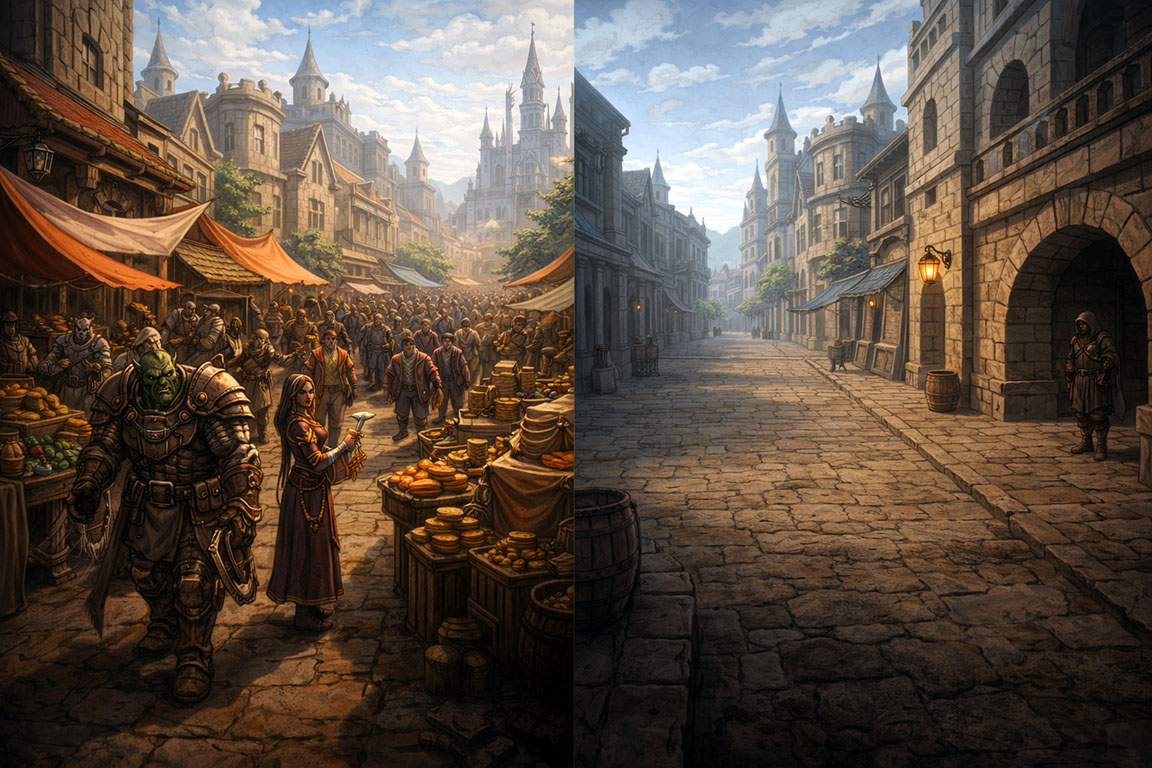
If you’ve ever played on more than one server in World of Warcraft, you may have noticed something confusing: the same item can cost wildly different amounts of gold depending on the server.
On one realm, consumables feel cheap and plentiful. On another, basic materials are expensive and hard to find. Gold itself feels more or less valuable — even though it’s technically the same currency everywhere.
The reason is simple but often misunderstood:
server population directly shapes the WoW gold economy.
This guide explains how server population affects WoW gold prices, why these differences exist in 2026, and what players should realistically expect when playing on low-, medium-, and high-population servers.
What “Server Population” Actually Means in WoW
Server population isn’t just about how many players exist — it’s about how many active participants are interacting with the economy.
Population affects:
How much gold enters the economy
How many items are listed on the Auction House
How competitive farming spots are
How stable prices remain over time
Even with cross-realm systems, each server still maintains its own economic identity, especially in Classic versions of WoW.
Supply and Demand: The Core Economic Principle
At its core, server population influences gold prices through supply and demand.
Supply = how many items and how much gold enter the market
Demand = how many players want those items
Population changes both sides of that equation at the same time.
These price differences make more sense once you understand how the WoW gold economy works.
High-Population Servers: Busy, Competitive, and Price-Stable
What Defines a High-Population Server?
High-population servers typically have:
Large, active player bases
Busy Auction Houses
Constant item turnover
Heavy competition for farming spots
Examples include major Retail realms and popular Classic servers.
How High Population Affects Gold Prices
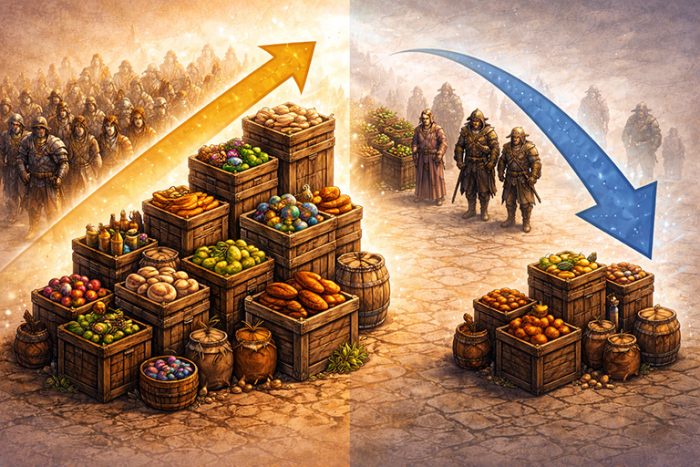
On high-population servers:
Supply is high because many players farm and list items
Demand is also high, but supply usually keeps pace
Prices tend to stabilize over time
You’ll often see:
Lower prices for common materials
Narrow price ranges
Frequent undercutting
Gold feels less scarce, but also less powerful, because prices are balanced around abundance.
The Upsides and Downsides
Pros:
Easy access to items
Predictable pricing
Active economy
Cons:
Intense competition
Small profit margins
High-population servers reward efficiency and volume, not casual farming.
Low-Population Servers: Scarcity, Volatility, and Opportunity
What Defines a Low-Population Server?
Low-population servers typically have:
Fewer active players
Sparse Auction Houses
Inconsistent item availability
Slower market movement
These are more common in Classic Era and niche realms.
How Low Population Affects Gold Prices
On low-population servers:
Supply is limited
Demand fluctuates sharply
Prices are often higher but unstable
You may see:
Expensive basic materials
Items missing from the AH entirely
Sudden price spikes
Gold feels more valuable, but also harder to use efficiently.
The Upsides and Downsides
Pros:
Less farming competition
Potentially high margins
More individual market influence
Cons:
Harder to buy what you need
Risky investments
Unpredictable pricing
On low-population servers, a single player can noticeably affect the economy.
Medium-Population Servers: The Middle Ground
Medium-population servers often offer the most balanced experience.
They usually have:
Enough supply to avoid extreme scarcity
Enough demand to keep markets moving
Moderate competition
Prices tend to:
Be higher than high-pop servers
Be more stable than low-pop servers
For many players, this is the most comfortable economic environment.
Why Server Population Matters More in Classic WoW
Smaller Economies, Bigger Impact
In Classic WoW:
Gold generation is slower
Fewer players farm efficiently
Every transaction matters more
As a result, population differences are magnified. Smaller player pools make gold on Classic servers far more sensitive to population changes.
Visibility Increases on Small Servers
On smaller Classic servers:
Large gold transfers stand out
Market manipulation is easier
Economic changes are noticed quickly
This makes Classic economies more sensitive to population changes than Retail.
Retail WoW: Population Still Matters (Just Less Dramatically)
Retail WoW has:
Massive gold inflation
Cross-realm systems
Higher overall liquidity
This softens population effects — but doesn’t remove them.
High-pop Retail servers still:
Have lower material prices
Offer faster market turnover
Low-pop Retail servers still:
Experience shortages
See higher prices for niche items
Auction House Dynamics by Population Size
High-Pop AH Behavior
Constant undercutting
Thin profit margins
High sales volume
Low-Pop AH Behavior
Price control by few sellers
Slower sales
Larger swings
Understanding your server’s AH behavior is more important than memorizing “average” prices.
Gold Value vs Gold Quantity
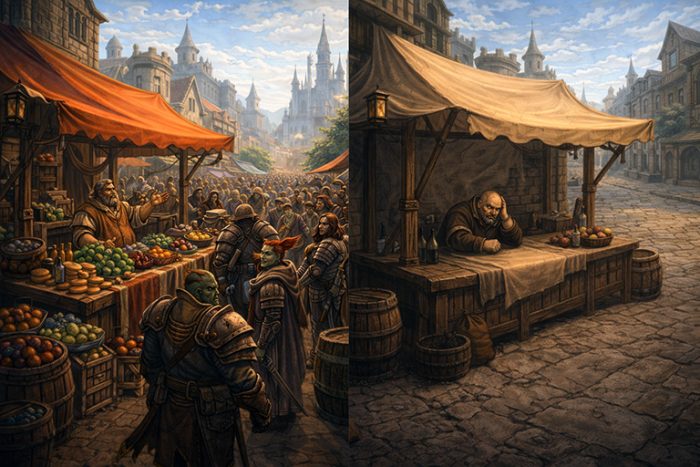
Population doesn’t just affect prices — it affects how gold feels.
On high-pop servers, gold is easier to spend
On low-pop servers, gold is harder to replace
This changes player behavior:
High-pop players spend freely
Low-pop players save cautiously
This directly affects how much gold you need in WoW Classic to stay comfortable.
Population Changes Over Time
Server populations are not static.
They change due to:
New expansions
Fresh Classic launches
Anniversary servers
Player migration
When population shifts, gold prices often:
Spike temporarily
Then slowly normalize
Early movers often benefit the most.
How Population Affects Farming Efficiency
Population directly impacts gold farming:
High-pop = crowded routes, lower gold/hour
Low-pop = easier access, but weaker markets
This means:
Farming more doesn’t always mean earning more
Selling efficiently matters as much as farming

Why Casual Players Feel Population Effects More Strongly
Casual players:
Farm less frequently
Rely more on the Auction House
Have less flexibility
On low-pop servers, this can feel punishing.
On high-pop servers, it can feel overwhelming.
This helps explain why casual WoW players struggle with gold on certain server types.
Time vs Value on Different Server Types
Server population also affects the time vs value equation.
High-pop: more time, less value per action
Low-pop: less competition, but higher risk
Players often underestimate how much population affects time efficiency, not just prices.
Population size changes the time vs value decisions in WoW significantly.
Why Some Players Supplement Gold on Certain Servers
On some servers:
Farming dominates playtime
Essential items are overpriced
Progress slows dramatically
This leads some players to consider supplementing gold — especially in Classic — to focus on gameplay instead of constant economic pressure.
Some players use platforms like Vanilla.Games when server population makes farming inefficient.
Choosing the Right Server for Your Playstyle
When selecting a server, consider:
How much time you can play
Whether you enjoy market interaction
Your tolerance for volatility
Whether you prefer stability or opportunity
There is no “best” population — only the best fit.
Final Thoughts: Server Population Shapes Everything
WoW gold prices don’t exist in a vacuum. They are shaped by:
Player count
Activity level
Market behavior
Time investment
Understanding how server population affects gold prices helps players:
Set realistic expectations
Avoid frustration
Make smarter economic decisions
Gold struggles often aren’t personal failures — they’re environmental effects.