Gold is the backbone of the World of Warcraft economy, but it doesn’t behave the same way across all versions of the game. Players often talk about “too much gold” in Retail or “never enough gold” in Classic — and both statements can be true at the same time.
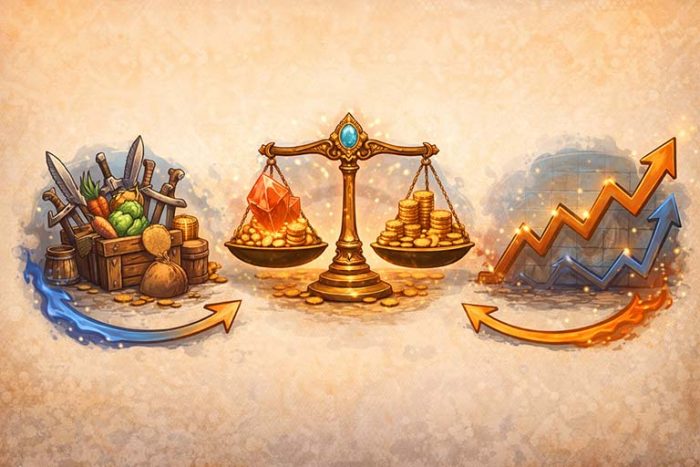
To understand why, you need to look at the WoW gold economy through three core concepts: inflation, scarcity, and value. These forces shape how gold is earned, spent, and perceived, and they explain why gold decisions feel trivial in some versions of WoW and critical in others.
This guide breaks down how the WoW gold economy works, why it feels so different across versions, and what players should understand in 2026.
What the WoW Gold Economy Really Is
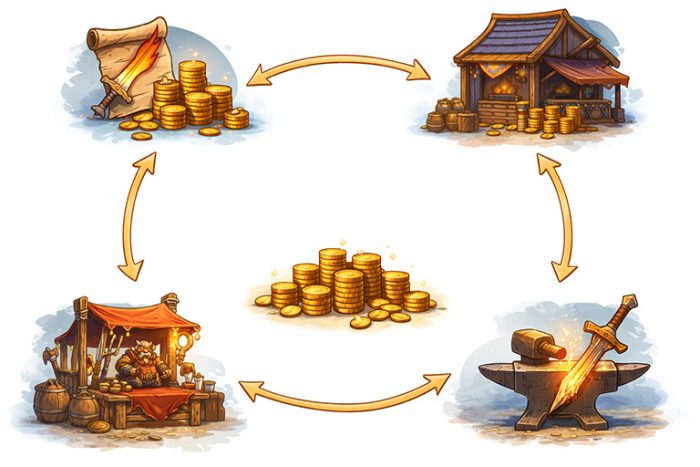
At its core, the WoW gold economy is a player-driven system influenced by:
Gold sources (how gold enters the game)
Gold sinks (how gold leaves the game)
Player behavior
Server population and activity
Blizzard’s design choices
Unlike real-world economies, Blizzard can directly add or remove gold from circulation by adjusting rewards, costs, and systems. Over time, these changes have dramatically reshaped how gold functions.
Gold Inflation: Why Retail Feels Flooded With Gold
What Is Gold Inflation?
Gold inflation happens when:
Gold enters the game faster than it leaves
Players accumulate more currency over time
Prices and expectations rise accordingly
In WoW, inflation isn’t theoretical — it’s a direct result of design decisions.
Why Retail WoW Is Highly Inflated
Retail WoW has accumulated inflation across many expansions due to:
Daily quests and world quests
Mission tables and passive income systems
Scaling rewards
Catch-up mechanics designed to reduce friction
Over years of iteration, this created an environment where:
Large gold balances are normal
Individual expenses feel small
Gold rarely blocks progression
As a result, Retail gold often functions as a convenience currency, not a limiting factor.
Blizzard’s Response to Inflation
Blizzard has attempted to manage Retail inflation through:
Expensive mounts and cosmetics
Gold-heavy optional services
Increased repair and crafting costs at times
These are gold sinks, designed to pull excess gold out of the economy. However, because gold generation remains high, inflation pressure continues.
Scarcity: Why Classic Gold Feels So Valuable
Classic Was Designed Around Scarcity
Classic WoW operates under very different assumptions:
Limited gold sources
Slower quest rewards
Meaningful repair and travel costs
Few passive income systems
Gold enters the Classic economy slowly and leaves it regularly, creating natural scarcity.
This scarcity is intentional. It forces players to:
Plan spending
Make trade-offs
Value preparation and efficiency
Scarcity Changes Player Behavior
In Classic:
Players think carefully before training every spell
Mount purchases are major milestones
Consumable usage is deliberate
Professions require commitment
Gold isn’t just something you have — it’s something you manage.
Gold Value: Why One Gold Is Not Always Equal
Gold Has Contextual Value
The value of gold depends on:
How hard it is to earn
What it can buy
What it prevents you from doing if you don’t have it
In Retail, lacking gold usually means inconvenience.
In Classic, lacking gold can mean missed progression.
This contrast explains why WoW gold matters more in Classic than it does in Retail.
Perceived Value vs Actual Value
Even if a player has more gold numerically in Retail, that gold often feels less valuable because:
Expenses are proportionally smaller
Systems are forgiving
Time-to-gold ratios are favorable
In Classic, a smaller amount of gold can feel extremely valuable because it represents:
Many hours of effort
Access to key milestones
Social readiness for group content
Gold Sources: How Gold Enters the Economy
Retail Gold Sources
Retail gold commonly comes from:
Daily and weekly content
World quests
Mission tables
Vendor trash at scale
These systems inject gold consistently and predictably.
Classic Gold Sources
Classic gold sources are limited:
Quest rewards
Vendor trash
Farming materials
Auction House trading
There are no modern systems designed to “smooth” income. Players must actively earn most of their gold.
Gold Sinks: How Gold Leaves the Economy
Gold sinks are crucial for economic balance.
Common Gold Sinks Across Versions
Repair costs
Training costs
Mount purchases
Profession leveling
Vendor items
The difference is how impactful these sinks feel.
Why Gold Sinks Matter More in Classic
Because Classic has less gold entering the economy:
Every sink has more weight
Mistakes are more punishing
Planning becomes essential
Retail sinks are often optional or cosmetic. Classic sinks are often mandatory for progress.
Auction House Dynamics and Gold Flow
Retail Auction House
Retail Auction Houses feature:
Massive supply
Constant undercutting
High liquidity
Gold moves quickly, and prices stabilize through volume.
Classic Auction House
Classic Auction Houses are:
Lower volume
More volatile
Strongly influenced by server population
One player’s behavior can noticeably affect prices, reinforcing the importance of gold awareness.
Server Population and Gold Value
High-Population Servers
More competition
Lower farming efficiency
More stable markets
Gold is easier to spend, harder to earn.
Low-Population Servers
Less competition
Higher price swings
Fewer buyers and sellers
Gold may be easier to farm but riskier to invest.
Anniversary and Fresh Servers: Inflation in Fast Forward
Fresh and Anniversary servers compress the entire gold lifecycle:
Extreme early scarcity
Rapid inflation
High early demand
Early phases create intense pressure on the fresh server gold economy.
MoP Classic: A Transitional Economy
MoP Classic represents a middle ground:
More gold generation than Vanilla Classic
More systems that require gold
Still far less inflated than Retail
Gold matters, but scarcity is less extreme.
How Understanding the Economy Affects Player Decisions
Players who understand inflation and scarcity:
Set realistic expectations
Avoid unnecessary frustration
Plan professions and mounts more effectively
Manage time better
Those who don’t often feel “poor” no matter how much gold they have.
Farming Gold vs Managing Time
As players progress, many face a choice:
Spend more time farming
Spend less time playing preferred content
This isn’t about shortcuts — it’s about time allocation.
When time becomes limited, players often research WoW gold safety in 2026 before making decisions.
Supplementing Gold Without Overdoing It
Some players choose to supplement gold when:
Playtime is limited
Farming becomes repetitive
Preparation costs dominate play sessions
Some players use platforms like Vanilla.Games to supplement gold responsibly when farming dominates their playtime.
Why Gold Will Always Matter in WoW
No matter how WoW evolves, gold remains essential because it:
Regulates player progression
Rewards time investment
Creates meaningful trade-offs
Inflation, scarcity, and value shift over time — but the economy remains central to the WoW experience.
Final Thoughts: Gold Is a System, Not Just a Currency
The WoW gold economy isn’t just about numbers. It’s about design philosophy.
Retail emphasizes accessibility and convenience.
Classic emphasizes planning and scarcity.
Understanding how inflation, scarcity, and value interact helps players:
Make better decisions
Enjoy their chosen version more
Avoid frustration rooted in misunderstanding
Gold isn’t just something you earn — it’s something you navigate.