

Professions in MoP Classic play a much bigger role than many players initially expect. While gold is easier to earn compared to Classic Era or Anniversary servers, profession-related costs quietly add up — especially for players who want to stay competitive without turning the game into a second job.
Mists of Pandaria introduced smoother systems, more predictable income, and stronger profession relevance. At the same time, it also shifted gold pressure away from raw scarcity and toward ongoing investment decisions.
This guide explains how professions affect gold costs in MoP Classic, what you realistically need to spend, where players overspend, and how to approach professions without draining your gold over time.
Why Professions Matter More in MoP Classic
MoP represents a design turning point for professions.
Compared to earlier Classic versions, MoP professions are:
More consistently useful
Integrated into endgame progression
Less bursty but more sustained in cost
Rather than one-time expenses, professions in MoP Classic create continuous gold sinks that reward planning and punish impulse spending.
Gold pressure doesn’t come from a single massive purchase — it comes from repeated, smaller decisions made over time.
Gathering Professions: Lower Barrier, Lower Ceiling
Herbalism, Mining, and Skinning
Gathering professions remain accessible and beginner-friendly in MoP Classic.
Pros:
No upfront gold investment
Immediate income while leveling
Useful as a supplement to other income sources
Cons:
Routes are heavily optimized
Competition is high early in phases
Prices stabilize quickly
Gathering rarely bankrupts players, but it also rarely creates large gold surpluses once markets mature.
Gold Expectations From Gathering
Most players use gathering to:
Cover repair costs
Offset consumable spending
Fund early profession leveling
Gathering works best when treated as support income, not a long-term gold strategy.

Crafting Professions: Where Gold Costs Add Up
Crafting professions are where most gold decisions happen in MoP Classic.
They offer consistent value, but they demand careful planning.
Why Crafting Feels Expensive
Crafting costs aren’t always obvious upfront because they are spread across:
Materials
Cooldowns
Failed market timing
Reinvestment loops
Players who ignore these hidden costs often feel “gold poor” despite earning more overall.
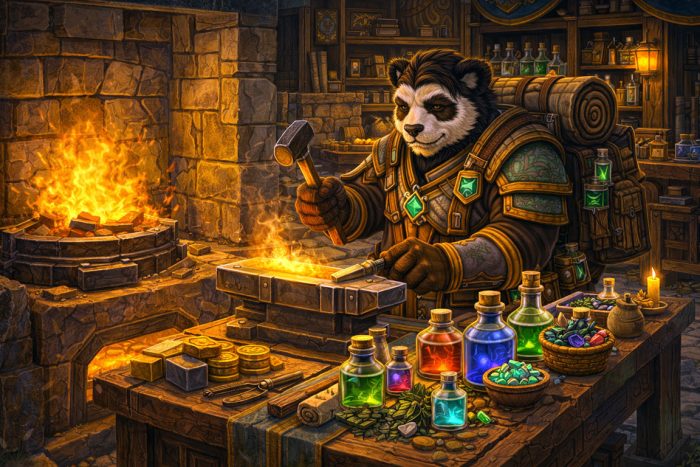
Profession-by-Profession Gold Cost Overview
Blacksmithing
Gold profile: High investment, steady returns
Main costs:
Ore (large quantities)
Crafted item experimentation
Recrafting for better timing
Blacksmithing rewards patience. Players who rush crafting often lock gold into items that sell slowly.
Alchemy
Gold profile: Moderate cost, high consistency
Main costs:
Herbs
Recipe acquisition
Transmutation cooldown management
Alchemy shines because it:
Scales well with dailies
Produces constant demand items
Has predictable turnover
It’s one of the most forgiving professions for gold management.
Enchanting
Gold profile: Hidden costs, high volatility
Main costs:
Disenchantable gear
Market timing mistakes
Stockpiling materials
Enchanting rewards players who understand demand cycles. Poor timing can trap gold in inventory.
Jewelcrafting
Gold profile: High entry cost, flexible output
Main costs:
Prospecting materials
Recipe experimentation
Market saturation risks
Jewelcrafting is powerful but unforgiving. Success depends on restraint more than volume.
Tailoring, Leatherworking, and Engineering
These professions sit in the middle ground.
Common traits:
Material-heavy
Phase-dependent demand
Gold efficiency improves with planning
They rarely drain gold instantly, but careless crafting can slowly bleed reserves.
Daily Cooldowns and Time-Based Costs
MoP Classic heavily emphasizes time-gated crafting.
This changes gold behavior in important ways:
You can’t brute-force profits with raw gold
Missing cooldowns costs opportunity, not currency
Gold efficiency improves with consistency
Time becomes the limiting factor — not raw gold availability.
This is one of the reasons MoP gold pressure feels lighter but more persistent.
Auction House Realities for Professions
MoP’s Auction House is more active and forgiving, but it’s also more competitive.
What the Auction House Rewards
Market awareness
Small, repeated listings
Adaptive pricing
What It Punishes
Emotional undercutting
Bulk crafting without demand
Hoarding materials indefinitely
Gold efficiency comes from movement, not accumulation.
Understanding how server population affects WoW gold prices helps profession players avoid locking gold into slow-moving items.
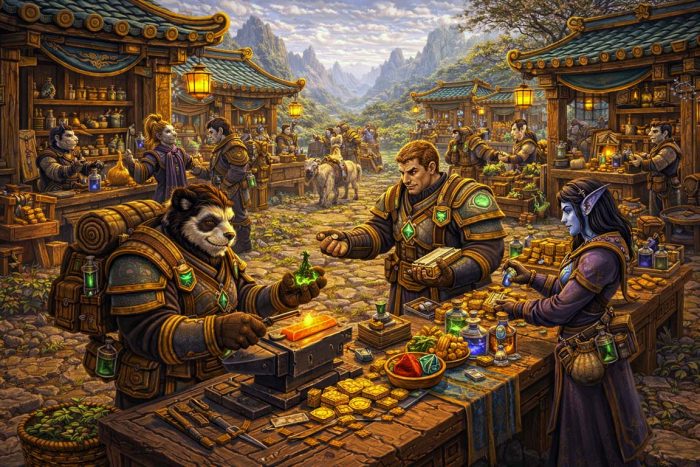
Repair, Consumables, and Profession Synergy
Profession choices indirectly affect ongoing costs.
Examples:
Crafting reduces consumable spending
Enchanting offsets gear upgrades
Alchemy smooths raid preparation costs
Players who align professions with playstyle reduce gold friction without chasing profits directly.
Profession choices directly influence how much gold you need in MoP Classic over the course of an expansion.
Common Profession-Related Gold Mistakes
Many MoP Classic gold problems come from behavior, not system design.
Common mistakes include:
Overcrafting during low demand
Ignoring cooldown value
Chasing “best” professions instead of suitable ones
Reinvesting gold emotionally
MoP rewards discipline more than aggression.
Professions vs Farming: The Real Tradeoff
In MoP Classic, professions quietly replace farming as the main gold stabilizer.
Farming:
Requires time bursts
Has diminishing returns
Leads to burnout
Professions:
Scale with consistency
Reward planning
Reduce long-term friction
This is why many players rethink gold farming vs buying gold once professions become their primary gold stabilizer.
When Gold Pressure Still Appears
Even with professions, gold pressure can show up when:
Multiple crafts overlap
Market timing goes wrong
Playtime drops unexpectedly
This is where players reassess how they allocate time versus effort.
Supplementing Gold: Context, Not Dependence
In MoP Classic, supplementing gold is rarely about survival.
Players usually consider it to:
Skip repetitive daily routines
Cover short-term profession gaps
Focus on raids or PvP during limited playtime
Some players explore Mists of Pandaria Classic Gold options when profession timing or limited playtime creates short-term gaps.
Professions in MoP Classic vs Other Versions
Classic Era:
Professions are punishing
Gold scarcity dominates decisions
Anniversary Servers:
Volatile markets
High competition
MoP Classic:
Predictable systems
Time-focused efficiency
Lower emotional pressure
Understanding this difference prevents unnecessary stress.
 Final Thoughts: Professions Are a Long Game in MoP Classic
 Final Thoughts: Professions Are a Long Game in MoP Classic
MoP Classic professions are not about quick wins.
They reward players who:
Plan ahead
Stay consistent
Respect time-gated systems
Spend gold to reduce friction, not chase power
Gold doesn’t disappear in MoP Classic — it flows.
The players who manage that flow calmly are the ones who enjoy the expansion the most.